
Cardstock Weight Guide: GSM, Pounds and the Right Paper for Each Craft
One pack says 180gsm, another says 65lb, and a third says 65 lb text, which is a much lighter sheet. Read both numbers with confidence and match the weight to cards, tags, boxes, folds and scrapbook pages.
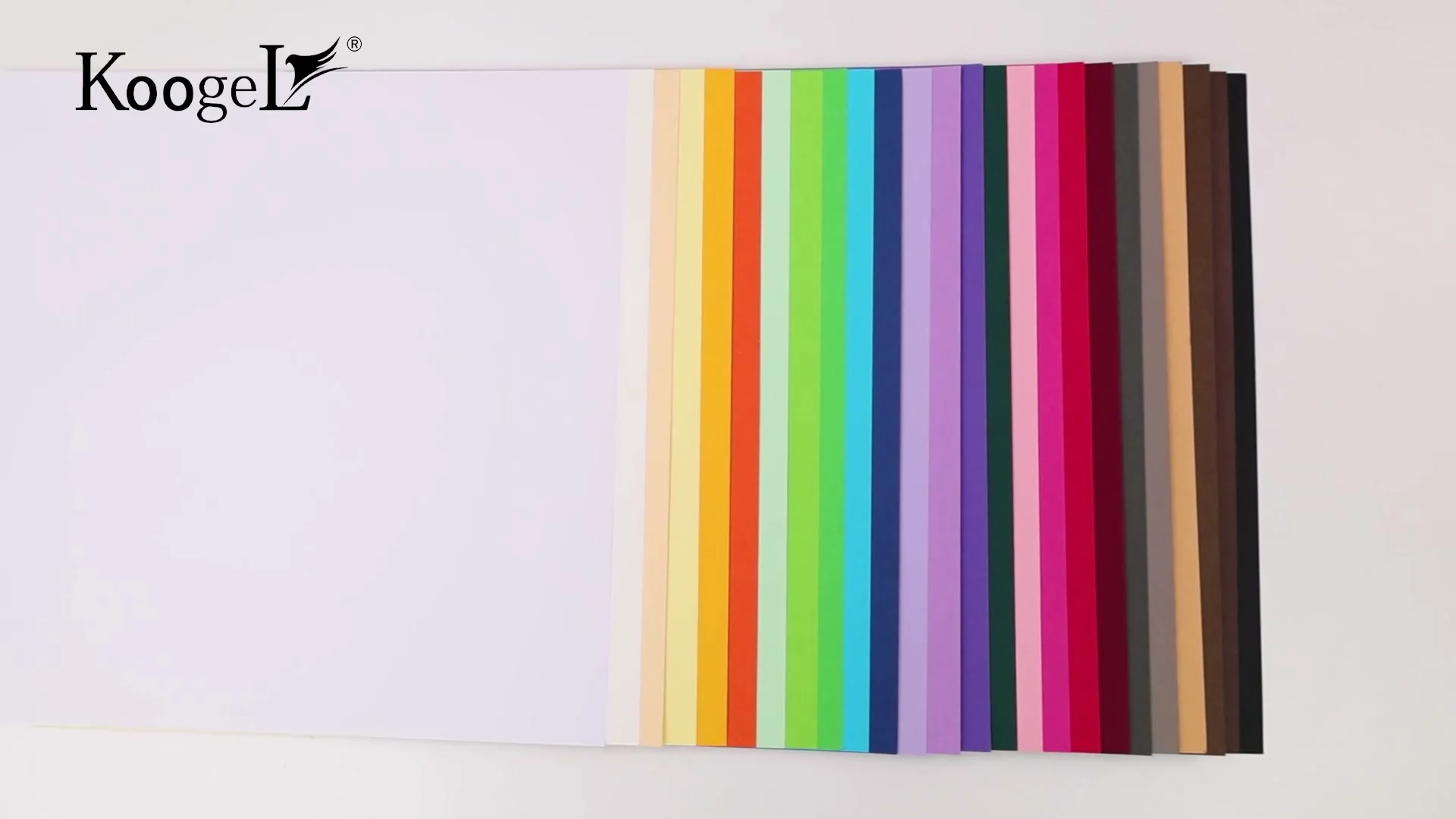
What gsm tells you about a sheet
Two packs on a craft table can describe the same paper in two different units. One reads 180gsm, the other reads 65lb, and both labels are telling the truth. Gsm means grams per square meter. Cut a sheet to exactly one meter by one meter, lay it on a kitchen scale, and the grams on the display are its grammage. A bigger or smaller sheet changes nothing, because the figure is already scaled to one square meter of paper.
There is an international method behind that number. ISO 536:2019 is the standard for grammage, and ISO's summary of it is a single line: the document "specifies a method for determining the grammage of paper and board." ISO lists the edition as last reviewed and confirmed in 2025, so a 250gsm label means the same thing on any continent.
Grammage tracks how much fiber sits in each square of the sheet, so it follows stiffness closely. Our legal pads use 70gsm paper, our hardcover sketchbooks have 100gsm pages, and our ring flash cards are cut from 230gsm stock. Hold one of each and you can rank them with your eyes closed. Every cardstock pack on the Koogel cardstock and craft paper shelf prints its gsm, so you can sort by one number.
Thickness is a separate measurement, called caliper. The printing services team at Utah Valley University notes in its paper primer that densely milled papers tend to be thinner than other papers of the same weight. Two sheets at 180gsm can therefore differ a little in the hand. For craft paper, though, gsm remains the most useful single figure, because it compares any paper with any other.
Why 65 lb cover is not 65 lb text
The US pound system weighs a ream, not a square meter. A ream is 500 sheets, and the size of the sheet that gets weighed depends on the grade of paper. The UVU primer lists these basic sheet sizes: 20 x 26 inches for cover, 25 x 38 for text, offset and book paper, and 17 x 22 for bond, copy and ledger paper. Whatever 500 basic sheets weigh in pounds becomes that paper's basis weight.
So the same pound number can sit on two different sheets. A text basic sheet covers 950 square inches, while a cover basic sheet covers 520. When both reams weigh the same, the text paper spreads its pounds over almost twice the area, and every sheet comes out thinner and lighter. The primer says it directly:
Understanding the concept of basic sheet enables one to explain why 80# cover and 80# text, having the same basis weight, are quite different papers in terms of bulk and thickness.
Utah Valley University Printing Services, Paper Primer: A practical Guide to Understanding Fine Printing Paper
Here is the gap in grams, worked step by step. A ream of text paper is 500 x 950 = 475,000 square inches, which equals 306.5 square meters. One pound is 453.6 grams, and 453.6 ÷ 306.5 = 1.48, so each pound of text weight adds 1.48gsm. That makes 65 lb text 65 x 1.48 = 96gsm, about the weight of good printer paper. The same steps for the cover grade, shown in the next section, put 65 lb cover near 176gsm.
Same label number, close to double the grams. That is why a pattern that asks for "65 lb paper" without a grade can send two people home with two different stacks. Look for the word cover, text or bond next to the pounds before you buy. If the grade is missing, look for the gsm instead, because it settles the question in one figure.
How to read the numbers on our packs
Our cardstock packs print both scales side by side. The A4 pack in 30 colors and the 12 x 12 white pack read 180gsm and 65lb, while our glitter cardstock and black A4 sheets read 250gsm and 92lb. A calculator and the cover basic sheet confirm each pair.
Start with the area. A 20 x 26 cover sheet is 520 square inches, and 500 x 520 = 260,000 square inches, which equals 167.7 square meters. Divide one pound by that area: 453.6 ÷ 167.7 = 2.704. Every pound of cover weight is worth 2.704gsm. Now the glitter sheet: 250 ÷ 2.704 = 92.5, which the pack prints as 92lb. For the 180gsm sheet, 180 ÷ 2.704 = 66.6, and the pack rounds it to 65lb, the cover weight crafters already know by name. Going the other way, 65 x 2.704 = 175.8gsm. A gap of about four grams is too small to feel, so 180gsm and 65lb cover belong in the same band.
One pack uses another scale. Our A4 craft paper reads 120gsm and 32lb, and that 32 is a bond weight, the scale for copy paper. The bond basic sheet is 17 x 22, or 374 square inches. A ream is 500 x 374 = 187,000 square inches, which is 120.6 square meters, and 453.6 ÷ 120.6 = 3.76gsm per bond pound. Then 120 ÷ 3.76 = 31.9, printed as 32lb. On the cover scale the same sheet would be 120 ÷ 2.704 = 44.4lb. The paper never changed, only the ruler did.
UVU's own table agrees with these factors. It lists 80# Cover at 216 GSM and 80# Text/Book at 118 GSM, and 80 x 2.704 = 216.3 while 80 x 1.48 = 118.4. With those two multipliers, any pound weight in a pattern turns into gsm.
Which weight for which job
Weight decides whether the finished piece holds its shape and whether your hands and tools can still work the paper. Light sheets fold into tight models with many layers. Heavy ones stand up on a table and survive a trip through the mail. Start from the job, then find its band in the table below.
Origami sits at the light end. A crane folds the same corner again and again, and stiff stock cracks before the neck gets narrow enough. Our 6 x 6 origami paper is colored on both sides, so the inside of every flap shows color too, and it comes as 250 sheets in 25 colors or 500 sheets in 20. The round 6-inch sheets fold into flowers, and the pack is clear that they are not cardstock and not meant for hanging tags.
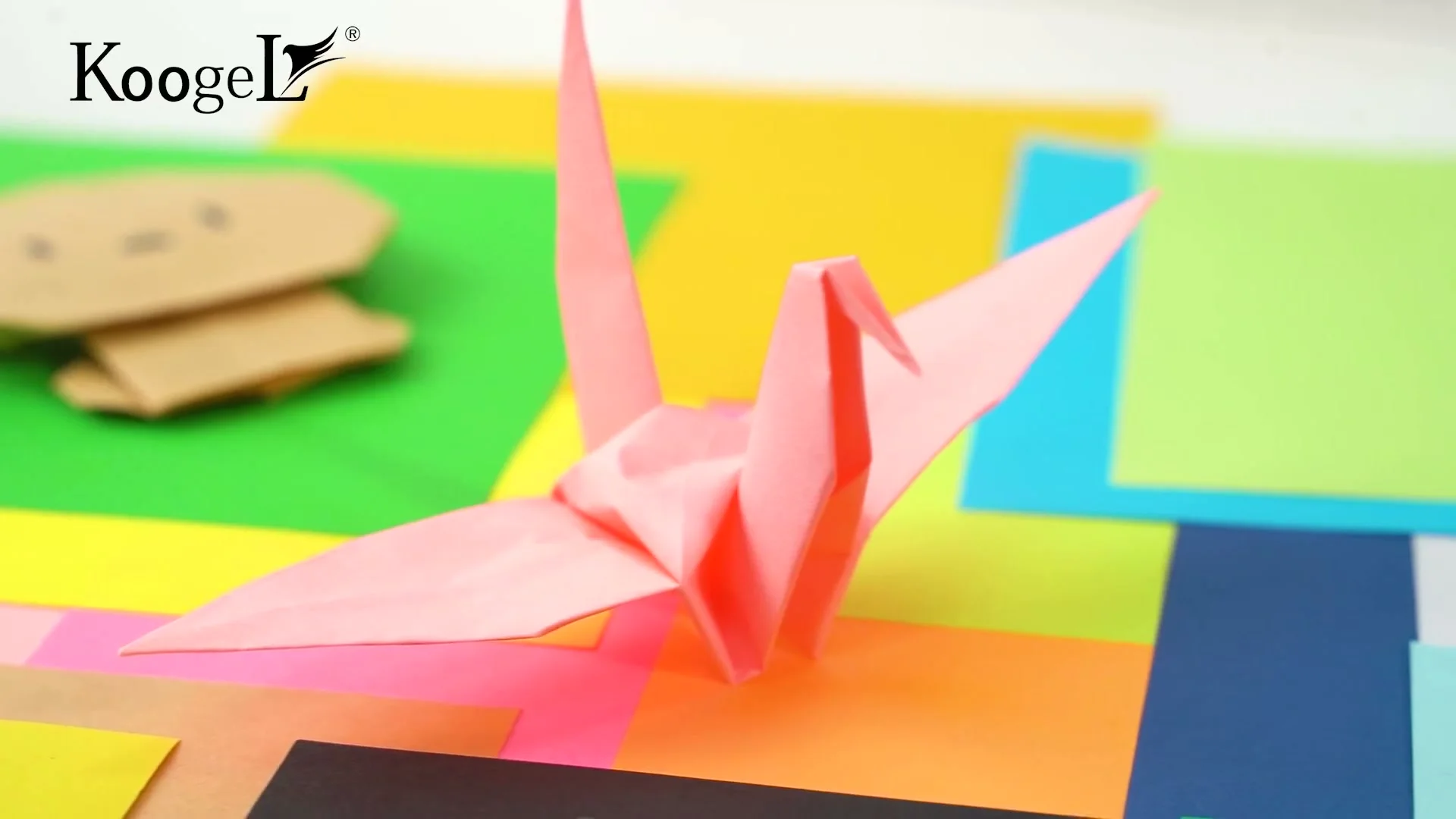
At 120gsm a child can cut the sheet with school scissors, and it still takes a crisp fold. Our A4 craft paper holds 60 sheets, three of each of 20 colors, for layered shapes, photo mats, bulletin boards and science fair panels.
Cardstock proper starts at 180gsm. Card bases, gift tags, album pages and invitations you print at home all live here. A 180gsm card folds once without fuss and keeps its shape inside an envelope, and a printed tag at this weight can finish a present wrapped with the tissue paper gift wrapping guide.
From 230 to 250gsm the paper has to stand on its own: gift boxes, cake toppers, party hats and 3D shapes. It is also the band for a stencil you cut yourself, because a 250gsm sheet lies flat under a sponge or a chalk stick while thinner paper lifts at the edges. For stenciling year after year, our American flag star stencils are PET/Mylar, which the pack says resists bending and tearing.
| Weight band | What it does well | Koogel paper in this band |
|---|---|---|
| 70gsm | Writing, notes, lists | Legal pads, 8.5 x 11 |
| 100gsm | Sketching and journaling | Hardcover sketchbooks |
| Light origami paper | Cranes, boxes, flowers, many-layer folds | Double-sided 6 x 6 origami, origami kit with fold book, round 6-inch sheets |
| 120gsm (32lb bond) | Kids' cutting, layers, photo mats, printing in color | A4 craft paper in 20 colors, letter mix (40 sheets at 120gsm) |
| 180gsm (65lb cover) | Card bases, tags, album pages, home-printed invitations | A4 in 30 colors, 12 x 12 white, 5 x 7 in 50 colors, letter in 60 colors |
| 230gsm | Scrapbook bases, labels, tabs, bookmarks | 12 x 12 in black or white, 100 sheets |
| 250gsm (92lb cover) | Boxes, cake toppers, party hats, die cuts, stencils you cut | A4 glitter, A4 black, letter in 30 colors, 8 x 10 white, letter mix (10 sheets at 250gsm) |
Will a home printer feed it?
Most trouble with heavy paper starts at the printer. A flexible sheet bends around the rollers and comes out the other side, while a stiff one can stall, skew or jam at the first curve. Our 180gsm packs say the weight runs through most home printers. The 250gsm black A4 pack says it feeds through most inkjet and laser printers, with a note to check your printer's gsm specification first.
That specification lives in the printer's manual or in the paper settings of its software, usually in gsm and sometimes per tray. Compare it with the gsm on our pack and you know the answer before a single sheet goes in. When the limit falls between 180 and 250, print on 180gsm and glue the print to a heavier base. A 120gsm print mounted on 250gsm works the same way.
Three habits help heavy stock through any machine. Use the manual or rear feed slot if the printer has one, because the sheet travels a straighter path. Choose the heaviest paper type the print dialog offers, often labeled cardstock, heavy or matte, so the printer treats the sheet as card instead of copy paper. Load one sheet at a time for the first test print.
Color under the ink changes the result too. Our 180gsm and 120gsm colored sheets are dyed through the core, so a cut edge matches the face, but the shade still tints whatever prints on top. Dark text on pale colors reads cleanly. On the 250gsm black A4 sheets a home printer's black ink simply disappears. Plan white, gold and silver details there with metallic pens, white charcoal or chalk markers, which the pack names as the media this deep black surface suits.
Scoring, folding and cutting heavy stock
Fold a 250gsm sheet without preparing it and the outside of the fold cracks into a ragged white line. Scoring prevents that. Our 5 x 7 and letter 180gsm packs say it in so many words: score before making sharp folds for cleaner results.
A score is a dent pressed along the fold line, so the fibers bend where you choose instead of breaking where they like. Lay a metal ruler on the line, then draw a bone folder or the back of a butter knife along it with firm, even pressure. Fold so the dent sits on the inside of the fold. Then press the folded edge flat with the side of the tool.
Paper also has a grain, the direction most of its fibers lie in. Folds that follow the grain go down flat, while folds across it push back and crack sooner. To find the grain on an unmarked sheet, cut a strip about an inch wide from each direction and fold both. The strip that bends smoothly runs with the grain. Plan card folds along it whenever the layout allows.
Cutting machines handle heavier stock with a deeper blade setting or a second pass, and a test cut on a scrap tells you which. Our 250gsm glitter cardstock is made for die cuts and for 3D pieces like cake toppers, party hats and gift boxes. Its 36 sheets come two each in 18 colors, with glitter on the front only and a smooth white back you can glue and write on. We make the glitter no-shed, so the sparkle stays on the sheet instead of the classroom floor. Glue from the white side, where the adhesive has a flat surface to grip.
A4, letter and 12 x 12: choosing a sheet size
Size matters as much as weight, because the sheet decides how many pieces you cut and how much goes in the scrap bin. Letter paper, at 8.5 x 11 inches, is the US office sheet and fits American printer trays and templates. The UVU primer points out that the bond basic sheet of 17 x 22 enables a printer to print four 8.5 x 11 documents on one sheet, and the arithmetic holds: 17 ÷ 8.5 = 2 and 22 ÷ 11 = 2, so 2 x 2 = 4.
A4, the international size, measures 8.27 x 11.7 inches. The two are closer than they look. An A4 sheet covers 8.27 x 11.7 = 96.8 square inches, and a letter sheet covers 8.5 x 11 = 93.5. A4 runs about a quarter inch narrower and about seven tenths of an inch longer. Choose A4 as the paper size in the print dialog before printing on it, or a letter template will land with uneven margins.
Twelve by twelve is the scrapbook size, and one sheet fills a full album page. Cut it in half each way and you get four 6 x 6 squares, because 12 ÷ 6 = 2 and 2 x 2 = 4. A letter sheet halves to 8.5 x 5.5, which folds into a 4.25 x 5.5 card, so one sheet gives you two card bases. Our 5 x 7 cardstock arrives precut for flat cards, postcards and photo mats, and the pack notes that it fits commonly used A7 envelopes. Teachers who cut tags or flash cards for a class can start from the table below and count pieces before they buy.
| Size | Inches | Area | Koogel packs at this size | What one sheet gives you |
|---|---|---|---|---|
| Letter | 8.5 x 11 | 93.5 sq in | 250gsm in 30 colors, 180gsm in 60 colors, 120gsm and 250gsm mix | Two 4.25 x 5.5 folded cards |
| A4 | 8.27 x 11.7 | 96.8 sq in | 180gsm in 30 colors, 250gsm glitter, 250gsm black, 120gsm craft paper | One full page with a little extra length |
| 12 x 12 | 12 x 12 | 144 sq in | 180gsm white, 230gsm black or white | One album page, or four 6 x 6 squares |
| 8 x 10 | 8 x 10 | 80 sq in | 250gsm white | One frame-size print or sign |
| 5 x 7 | 5 x 7 | 35 sq in | 180gsm in 50 colors | One flat card or invitation |
| 6 x 6 | 6 x 6 | 36 sq in | Double-sided origami paper | One origami model |
Acid-free and lignin-free: what it means for scrapbooks and photos
A scrapbook page is meant to outlast the moment in its photos, and the paper decides much of that. The Library of Congress explains that acids, in the presence of moisture, cut the cellulose chains of paper into shorter lengths. Acid hydrolysis, as the Library calls it, produces more acids as it goes, and lignin from wood feeds it:
Mechanical pulping produces paper with the shortest fiber length and does not remove lignin from the wood, which promotes acid hydrolysis.
Library of Congress, The Deterioration and Preservation of Paper: Some Essential Facts
That is the yellow, brittle newsprint of an old clipping, since the Library notes that newspapers are printed on mechanically pulped paper. For good storage it names cooler temperatures and 30-40% relative humidity.
Most of our cardstock packs are acid-free and lignin-free, including the A4 180gsm sheets, the 12 x 12 white and 230gsm sheets, the 8 x 10 white, the 5 x 7 colors and the 120gsm craft paper. So the page itself brings no acid into your album.
Photos ask for one more step. For anything that touches a print, the Library's photo care page points to ISO 18902 and the Photographic Activity Test (PAT), and it warns against albums with colored, magnetic or sticky self-adhesive pages. Acid-free and lignin-free are not the same as passing PAT. Slide an irreplaceable print into a photo-safe sleeve on a white layer, and let colored cardstock frame the page around it. For photographs the Library suggests 30-50% relative humidity and 70°F or below.
The same logic reaches past the craft table. Our ring flash cards use 230gsm stock, and the habits that make them work are in how to study with index cards. Every band in the first table has a pack in Koogel stationery, so you can match paper to job before the first cut.